
Monthly vs Yearly Prepayment: Which Saves More?
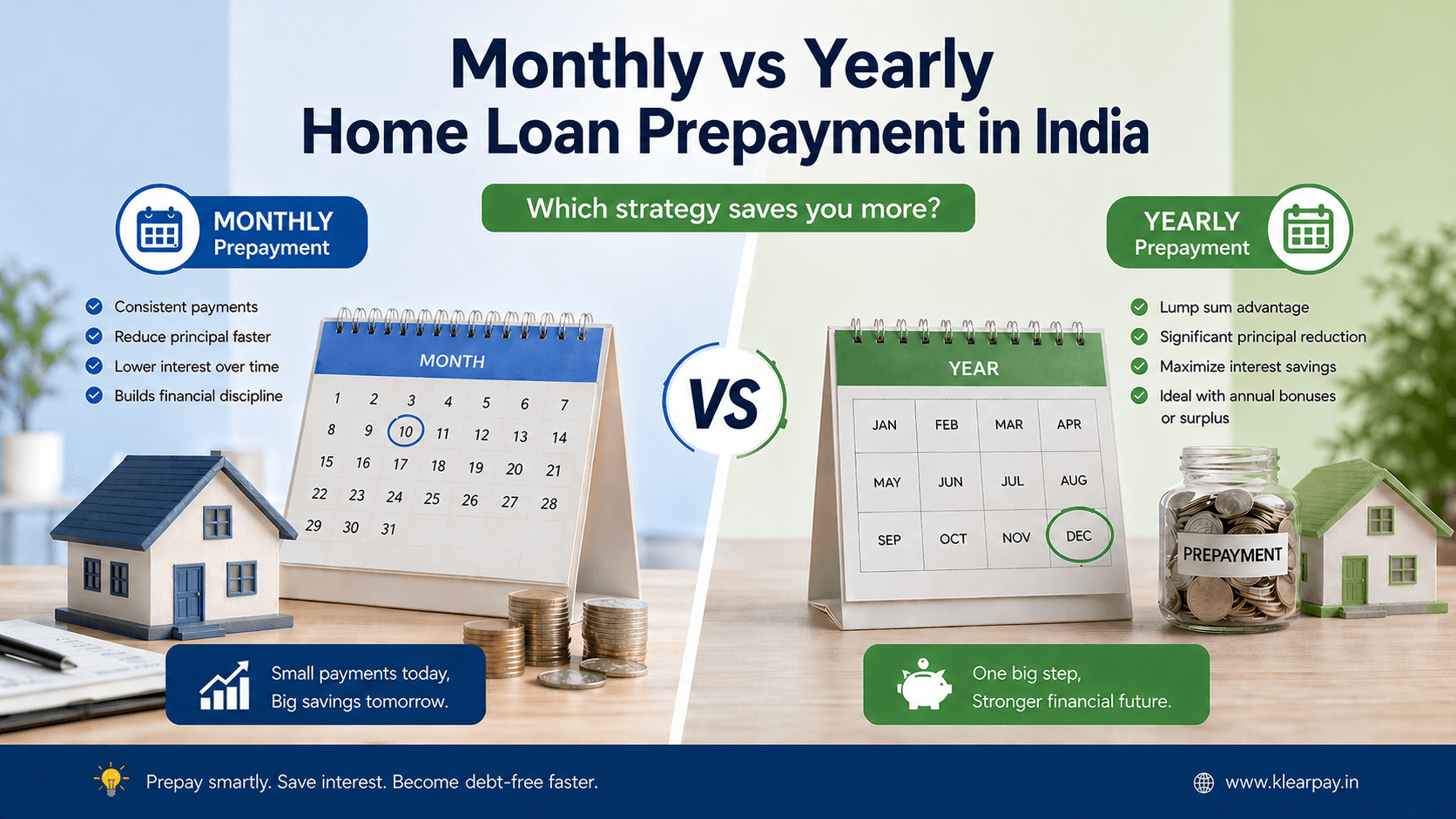
Monthly ₹5,000 saves ₹13.9L. Yearly ₹60,000 saves ₹13.0L. Same total annual outflow, but the monthly approach saves ₹0.9L more because interest stops accruing on a lower principal from month one.
Last updated: Published 21 January 2026
Published 21 January 2026
Monthly vs yearly: the exact numbers
For a ₹50L loan at 8.5% for 20 years, with a total annual prepayment budget of ₹60,000:
| Strategy | Total annual outflow | Interest saved | Closes early |
|---|---|---|---|
| ₹5,000/month (monthly) | ₹60,000/year | ₹13.9 lakh | 4 years 5 months |
| ₹60,000 lump sum (yearly) | ₹60,000/year | ₹13.0 lakh | 4 years 2 months |
Why monthly prepayments save more
The reason is simple: money that reduces principal today stops accruing interest from today. If you prepay ₹5,000 in January, February, March… each payment reduces the principal base on which interest is calculated for the rest of the year.
With a yearly lump sum, the ₹60,000 sits idle (earning at most savings account rates) for up to 11 months before being applied. During those months, interest continues accruing on the full outstanding balance.
The difference is not dramatic at ₹0.9L, but it is free money. If monthly prepayments are equally convenient, they are the better option.
When yearly lump sum prepayment makes sense
- Your lender charges a fee per prepayment transaction, making 12 monthly charges more expensive than one annual fee
- Your cash flow is irregular, with a salary + annual bonus structure that makes lump sum prepayment more practical
- Your lender has a minimum prepayment threshold that makes small monthly amounts ineligible
- You prefer simplicity: one annual decision rather than monthly tracking
The practical recommendation
If your lender allows free, unlimited part-prepayments (common for floating-rate loans under current RBI rules), monthly prepayments are marginally better and require no extra effort once set up.
If lump sum annual prepayment is more practical for your income pattern, such as when funded by a yearly bonus, the difference is small. ₹13.0L saved vs ₹13.9L saved is still an excellent outcome for either approach.
See bank-specific prepayment worked examples: HDFC, SBI, ICICI, or view all 12 banks.
FAQs
See your personalised numbers
The examples above use a typical ₹50L loan. Upload your statement to see the monthly vs yearly comparison for your exact balance and rate.
Recommended articles
Complete Guide · 2026
Home Loan Prepayment Guide India 2026
Everything you need to know about prepaying your home loan in India, including when to start, how much interest you can save, and how to decide between prepayment and investing.
Read articlePrepayment Strategy
Best Time to Prepay Your Home Loan in India
The timing of your home loan prepayment matters as much as the amount. Here is why the first 7 years are your most valuable window.
Read articleSavings Calculator
How Much Do You Save Prepaying ₹1 Lakh Every Year?
Exact numbers showing the interest savings from a ₹1 lakh annual prepayment across three common loan sizes.
Read articleJoin thousands of smart borrowers
₹12.45L+
Interest Saved
500+
Active Users
30 sec
Avg Analysis Time