
Home Loan Tax Benefits: Old vs New Regime 2026
Section 24(b) and 80C work very differently under the old and new tax regimes. Here is exactly what applies to your home loan, and how prepayment changes the picture.
Last updated: Published 4 February 2026
Published 4 February 2026
Home loan tax benefits under the old tax regime
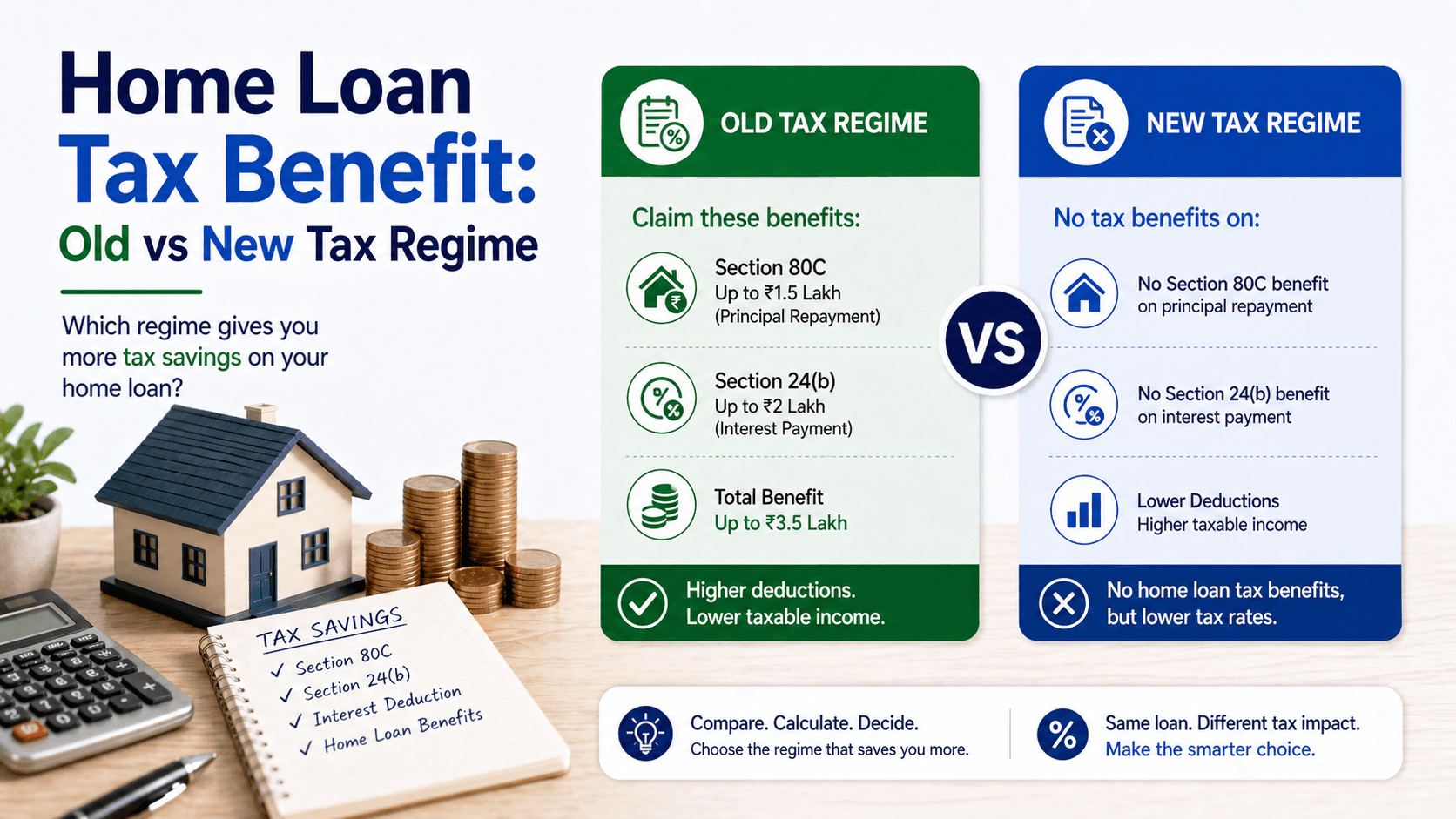
Under the old tax regime, home loan borrowers (self-occupied property) can claim two deductions:
- Section 24(b): Interest paid on a home loan is generally deductible up to ₹2 lakh per year for self-occupied properties, subject to conditions including the loan being taken for purchase or construction
- Section 80C: Principal repayment (including EMI principal and prepayments) counts toward the broader ₹1.5 lakh Section 80C cap, which is shared with other eligible investments like PPF, ELSS, and life insurance premiums
Home loan tax benefits under the new tax regime
Under the new tax regime (default from FY 2023–24 onwards), the tax landscape for home loans changes significantly:
- Section 24(b) deduction on interest for self-occupied properties is generally not available under the new regime
- Section 80C deductions are generally not available under the new regime
The new regime offers lower slab rates in exchange for giving up most deductions. For many homeowners, especially those with few other deductions, the new regime may still result in lower total tax.
Side-by-side comparison
| Benefit | Old regime | New regime |
|---|---|---|
| Section 24(b) interest deduction | Up to ₹2L/year (self-occupied) | Generally not available |
| Section 80C principal deduction | Part of ₹1.5L cap | Generally not available |
| Tax slab rates | Higher slabs | Lower slabs |
| Overall impact | Beneficial if deductions are large | Beneficial if deductions are small |
How prepayment affects your tax position
Under the old regime: prepaying your loan reduces your outstanding balance and therefore your interest outgo. If your annual interest was near the ₹2L deduction limit, aggressive prepayment can reduce the deduction you claim, effectively increasing your tax liability by a small amount. This "cost" is usually far smaller than the interest you save.
Under the new regime: since the interest deduction is generally not available, prepayment has no negative tax impact. You save the full interest amount without reducing any deduction.
To see the actual interest you could save (before factoring in any tax implications), use your bank's calculator: HDFC prepayment calculator, SBI prepayment calculator, or browse all banks.
FAQs
Know exactly what prepayment saves on your loan
Before weighing tax implications, you need the base number: how much interest will you actually save by prepaying? That depends on your outstanding balance, current rate, and remaining tenure.
KlearPay generates a personalised prepayment savings report in under 2 minutes. Upload your home loan statement and get the exact numbers for your loan.
Recommended articles
Complete Guide · 2026
Home Loan Prepayment Guide India 2026
Everything you need to know about prepaying your home loan in India, including when to start, how much interest you can save, and how to decide between prepayment and investing.
Read articlePrepayment vs Investing
Home Loan Prepayment vs SIP 2026: Which Wins?
Guaranteed interest savings vs market-linked SIP returns, with a clear decision framework for Indian homeowners.
Read articlePrepayment Strategy
Best Time to Prepay Your Home Loan in India
The timing of your home loan prepayment matters as much as the amount. Here is why the first 7 years are your most valuable window.
Read articleJoin thousands of smart borrowers
₹12.45L+
Interest Saved
500+
Active Users
30 sec
Avg Analysis Time