
ഭവന വായ്പ നികുതി ആനുകൂല്യങ്ങൾ: പഴയതും പുതിയതുമായ 2026 ഭരണകാലം
പഴയതും പുതിയതുമായ നികുതി വ്യവസ്ഥകൾക്ക് കീഴിൽ സെക്ഷൻ 24(b) ഉം 80C ഉം വളരെ വ്യത്യസ്തമായി പ്രവർത്തിക്കുന്നു. നിങ്ങളുടെ ഭവന വായ്പയ്ക്ക് കൃത്യമായി എന്താണ് ബാധകമാകുന്നത് എന്നും പ്രീപേയ്മെന്റ് ചിത്രം എങ്ങനെ മാറ്റുന്നുവെന്നും ഇതാ.
Last updated: Published 4 February 2026
Published 4 February 2026
പഴയ നികുതി വ്യവസ്ഥയ്ക്ക് കീഴിലുള്ള ഭവന വായ്പ നികുതി ആനുകൂല്യങ്ങൾ
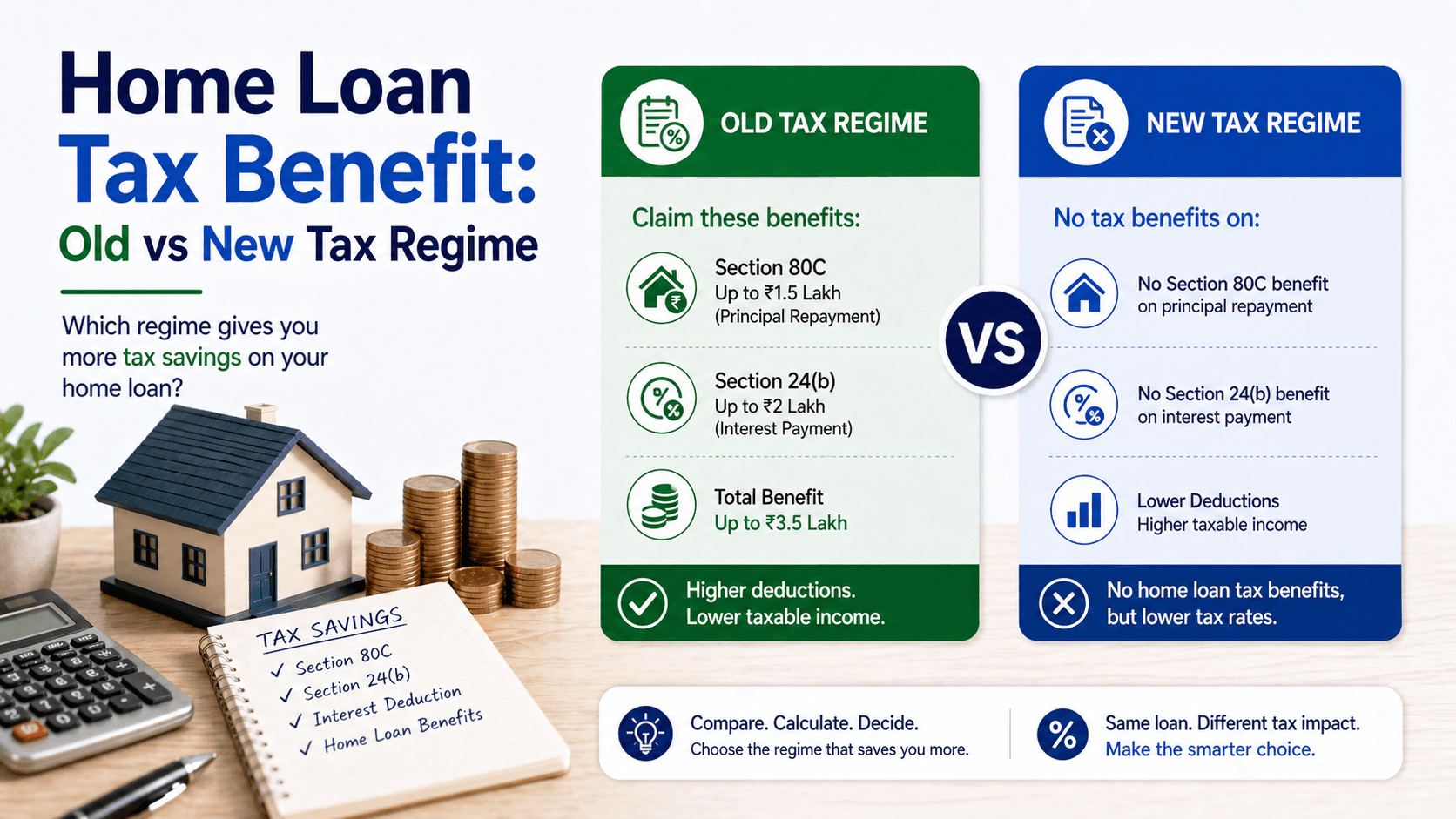
പഴയ നികുതി വ്യവസ്ഥ പ്രകാരം, ഭവന വായ്പ എടുക്കുന്നവർക്ക് (സ്വയം കൈവശപ്പെടുത്തിയിരിക്കുന്ന സ്വത്ത്) രണ്ട് കിഴിവുകൾ ക്ലെയിം ചെയ്യാൻ കഴിയും:
- സെക്ഷൻ 24(b): വാങ്ങുന്നതിനോ നിർമ്മാണത്തിനോ വേണ്ടി എടുക്കുന്ന വായ്പ ഉൾപ്പെടെയുള്ള വ്യവസ്ഥകൾക്ക് വിധേയമായി, സ്വന്തമായി താമസിക്കുന്ന വസ്തുവകകൾക്ക് ഭവന വായ്പയ്ക്ക് നൽകുന്ന പലിശയ്ക്ക് സാധാരണയായി പ്രതിവർഷം ₹2 ലക്ഷം വരെ കിഴിവ് ലഭിക്കും.
- സെക്ഷൻ 80C: പ്രിൻസിപ്പൽ തിരിച്ചടവ് (EMI പ്രിൻസിപ്പലും പ്രീപേയ്മെന്റുകളും ഉൾപ്പെടെ) വിശാലമായ ₹1.5 ലക്ഷത്തിൽ ഉൾപ്പെടുന്നു. സെക്ഷൻ 80C പരിധി, ഇത് PPF, ELSS, ലൈഫ് ഇൻഷുറൻസ് പ്രീമിയങ്ങൾ പോലുള്ള മറ്റ് യോഗ്യമായ നിക്ഷേപങ്ങളുമായി പങ്കിടുന്നു.
പുതിയ നികുതി വ്യവസ്ഥയ്ക്ക് കീഴിലുള്ള ഭവനവായ്പ നികുതി ആനുകൂല്യങ്ങൾ
പുതിയ നികുതി വ്യവസ്ഥ പ്രകാരം (2023–24 സാമ്പത്തിക വർഷം മുതൽ സ്ഥിരസ്ഥിതി), ഭവന വായ്പകളുടെ നികുതി ഘടനയിൽ കാര്യമായ മാറ്റങ്ങൾ സംഭവിക്കുന്നു:
- പുതിയ വ്യവസ്ഥയിൽ സ്വയം കൈവശം വച്ചിരിക്കുന്ന സ്വത്തുക്കളുടെ പലിശയിൽ സെക്ഷൻ 24(ബി) കിഴിവ് സാധാരണയായി ലഭ്യമല്ല.
- പുതിയ വ്യവസ്ഥയിൽ സെക്ഷൻ 80C പ്രകാരമുള്ള കിഴിവുകൾ സാധാരണയായി ലഭ്യമല്ല.
പുതിയ നികുതി വ്യവസ്ഥ മിക്ക കിഴിവുകളും ഉപേക്ഷിക്കുന്നതിന് പകരമായി കുറഞ്ഞ സ്ലാബ് നിരക്കുകൾ വാഗ്ദാനം ചെയ്യുന്നു. പല വീട്ടുടമസ്ഥർക്കും, പ്രത്യേകിച്ച് മറ്റ് കുറച്ച് കിഴിവുകൾ ഉള്ളവർക്ക്, പുതിയ നികുതി വ്യവസ്ഥ ഇപ്പോഴും മൊത്തം നികുതിയിൽ കുറവുണ്ടാക്കിയേക്കാം.
വശങ്ങളിലായി താരതമ്യം ചെയ്യൽ
| പ്രയോജനം | പഴയ ഭരണകൂടം | പുതിയ ഭരണക്രമം |
|---|---|---|
| സെക്ഷൻ 24(ബി) പലിശ കിഴിവ് | പ്രതിവർഷം ₹2L വരെ (സ്വയം ജോലി) | സാധാരണയായി ലഭ്യമല്ല |
| സെക്ഷൻ 80C മുതലിന്റെ കിഴിവ് | ₹1.5L ക്യാപ്പിന്റെ ഒരു ഭാഗം | സാധാരണയായി ലഭ്യമല്ല |
| നികുതി സ്ലാബ് നിരക്കുകൾ | ഉയർന്ന സ്ലാബുകൾ | താഴത്തെ സ്ലാബുകൾ |
| മൊത്തത്തിലുള്ള ആഘാതം | കിഴിവുകൾ വലുതാണെങ്കിൽ പ്രയോജനകരമാണ് | കിഴിവുകൾ ചെറുതാണെങ്കിൽ പ്രയോജനകരമാണ് |
പ്രീപേയ്മെന്റ് നിങ്ങളുടെ നികുതി സ്ഥാനത്തെ എങ്ങനെ ബാധിക്കുന്നു
പഴയ വ്യവസ്ഥയിൽ: നിങ്ങളുടെ വായ്പ മുൻകൂട്ടി അടയ്ക്കുന്നത് നിങ്ങളുടെ കുടിശ്ശിക ബാലൻസും അതുവഴി നിങ്ങളുടെ പലിശയും കുറയ്ക്കുന്നു. നിങ്ങളുടെ വാർഷിക പലിശ ₹2 ലക്ഷം കിഴിവ് പരിധിക്ക് അടുത്താണെങ്കിൽ, ആക്രമണാത്മകമായ മുൻകൂർ പേയ്മെന്റ് നിങ്ങൾ അവകാശപ്പെടുന്ന കിഴിവ് കുറയ്ക്കുകയും നിങ്ങളുടെ നികുതി ബാധ്യത ഒരു ചെറിയ തുക ഫലപ്രദമായി വർദ്ധിപ്പിക്കുകയും ചെയ്യും. ഈ "ചെലവ്" സാധാരണയായി നിങ്ങൾ ലാഭിക്കുന്ന പലിശയേക്കാൾ വളരെ ചെറുതാണ്.
പുതിയ നികുതി വ്യവസ്ഥ പ്രകാരം: പലിശ കിഴിവ് പൊതുവെ ലഭ്യമല്ലാത്തതിനാൽ, പ്രീപേയ്മെന്റിന് നെഗറ്റീവ് നികുതി പ്രത്യാഘാതമില്ല. ഒരു കിഴിവും കുറയ്ക്കാതെ തന്നെ നിങ്ങൾ മുഴുവൻ പലിശ തുകയും ലാഭിക്കുന്നു.
നിങ്ങൾക്ക് ലാഭിക്കാൻ കഴിയുന്ന യഥാർത്ഥ പലിശ കാണാൻ (ഏതെങ്കിലും നികുതി ബാധ്യതകൾ പരിഗണിക്കുന്നതിന് മുമ്പ്), നിങ്ങളുടെ ബാങ്കിന്റെ കാൽക്കുലേറ്റർ ഉപയോഗിക്കുക:HDFC പ്രീപേയ്മെന്റ് കാൽക്കുലേറ്റർ,എസ്ബിഐ പ്രീപേയ്മെന്റ് കാൽക്കുലേറ്റർ, അല്ലെങ്കിൽഎല്ലാ ബാങ്കുകളും ബ്രൗസ് ചെയ്യുക.
പതിവ് ചോദ്യങ്ങൾ
നിങ്ങളുടെ ലോണിൽ എന്ത് പ്രീപേയ്മെന്റ് ലാഭിക്കുന്നുവെന്ന് കൃത്യമായി അറിയുക
നികുതി പ്രത്യാഘാതങ്ങൾ കണക്കാക്കുന്നതിന് മുമ്പ്, നിങ്ങൾക്ക് അടിസ്ഥാന നമ്പർ ആവശ്യമാണ്: മുൻകൂട്ടി പണമടയ്ക്കുന്നതിലൂടെ നിങ്ങൾക്ക് യഥാർത്ഥത്തിൽ എത്ര പലിശ ലാഭിക്കാൻ കഴിയും? അത് നിങ്ങളുടെ കുടിശ്ശിക ബാലൻസ്, നിലവിലെ നിരക്ക്, ശേഷിക്കുന്ന കാലയളവ് എന്നിവയെ ആശ്രയിച്ചിരിക്കുന്നു.
KlearPay 2 മിനിറ്റിനുള്ളിൽ ഒരു വ്യക്തിഗത പ്രീപേയ്മെന്റ് സേവിംഗ്സ് റിപ്പോർട്ട് സൃഷ്ടിക്കുന്നു. നിങ്ങളുടെ ഹോം ലോൺ സ്റ്റേറ്റ്മെന്റ് അപ്ലോഡ് ചെയ്ത് നിങ്ങളുടെ ലോണിന്റെ കൃത്യമായ നമ്പറുകൾ നേടൂ.
Recommended articles
Complete Guide · 2026
Home Loan Prepayment Guide India 2026
Everything you need to know about prepaying your home loan in India, including when to start, how much interest you can save, and how to decide between prepayment and investing.
ലേഖനം വായിക്കുകPrepayment vs Investing
Home Loan Prepayment vs SIP 2026: Which Wins?
Guaranteed interest savings vs market-linked SIP returns, with a clear decision framework for Indian homeowners.
ലേഖനം വായിക്കുകPrepayment Strategy
Best Time to Prepay Your Home Loan in India
The timing of your home loan prepayment matters as much as the amount. Here is why the first 7 years are your most valuable window.
ലേഖനം വായിക്കുകആയിരക്കണക്കിന് സ്മാർട്ട് കടക്കാരോടൊപ്പം ചേരുക
₹12.45L+
പലിശ ലാഭം
500+
സജീവ ഉപയോക്താക്കൾ
30 സെക്
ശരാശരി വിശകലന സമയം