
भारत में होम लोन का प्रीपेमेंट करने का सबसे अच्छा समय
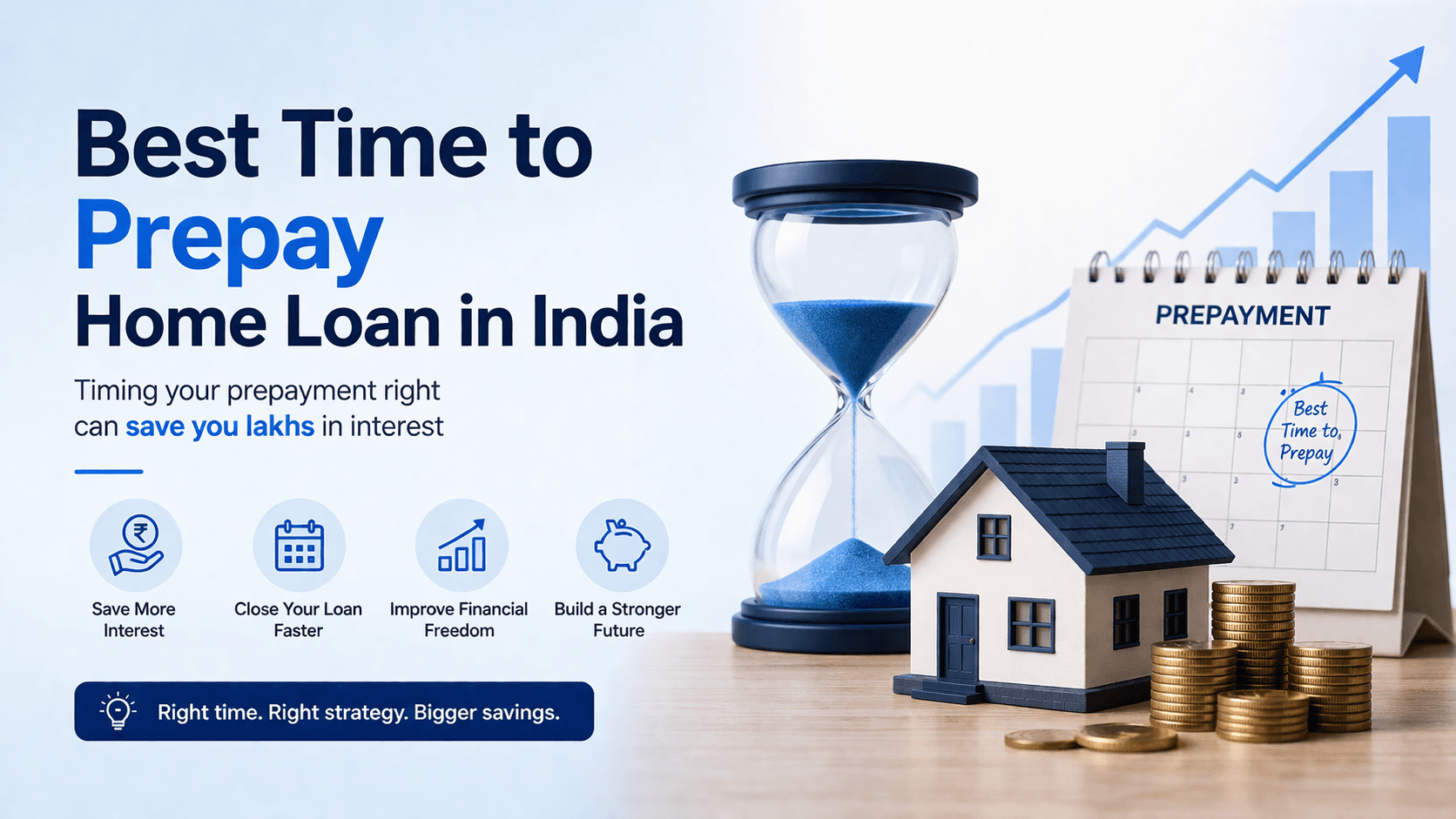
पहले साल में हर महीने ₹5,000 अतिरिक्त देने से ₹13.9 लाख की बचत होती है और आपका लोन 4 साल पहले चुकाया जा सकता है। वहीं, 10वें साल में इतनी ही राशि देने से सिर्फ ₹2.8 लाख की बचत होती है। यह अंतर लोन चुकाने की प्रक्रिया पर निर्भर करता है, और इस एक तथ्य को जानने से आप लाखों रुपये बचा सकते हैं।
Last updated: Published 15 April 2026 · Updated 5 May 2026
Published 15 April 2026 · Updated 5 May 2026
होम लोन के प्रीपेमेंट में समय का महत्व क्यों है?
होम लोन किस्तों में चुकाए जाते हैं: आपकी EMI तय रहती है, लेकिन ब्याज और मूलधन का अनुपात हर महीने बदलता रहता है। शुरुआती वर्षों में, प्रत्येक EMI का अधिकांश हिस्सा ब्याज में जाता है। जैसे-जैसे साल बीतते हैं, मूलधन का हिस्सा धीरे-धीरे बढ़ता जाता है।
ब्याज का यह अग्रिम भुगतान ही वह कारण है जिसके चलते समय से पहले भुगतान करने का असाधारण प्रभाव पड़ता है। दूसरे वर्ष में आपके मूलधन में कमी करने वाला प्रत्येक रुपया, ऋण की शेष 18 वर्षों की अवधि के लिए उस राशि पर ब्याज बचाता है। वहीं, 15वें वर्ष में चुकाया गया वही रुपया केवल 5 वर्षों के ब्याज की बचत करता है।
पहले 7 साल: आपके करियर का सबसे प्रभावशाली समय
आपके ऋण की अवधि का पहला आधा हिस्सा, यानी लगभग 1 से 7-8 वर्ष, वह समय होता है जब प्रत्येक EMI का 70-80% ब्याज होता है। इस अवधि के दौरान समय से पहले भुगतान करने से आपको प्रति रुपये अधिकतम लाभ मिलता है।
गणित इस प्रकार है: ₹50 लाख के ऋण के पहले वर्ष में, जिसकी ब्याज दर 8.5% है और जिसकी अवधि 20 वर्ष है, आपकी बकाया राशि लगभग ₹50 लाख है। प्रत्येक ₹1 लाख का अग्रिम भुगतान शेष 19+ वर्षों के लिए ₹1 लाख पर ब्याज बचाता है। 15वें वर्ष में, बकाया राशि काफी कम हो जाती है और शेष अवधि केवल 5 वर्ष रह जाती है, इसलिए वही ₹1 लाख का अग्रिम भुगतान उस राशि के एक अंश की बचत करता है।
मध्य बिंदु के बाद, ब्याज-मूलधन अनुपात बदल जाता है। आप अब उच्च ब्याज दर वाले चरण में नहीं हैं। 20 साल के ऋण के 15वें वर्ष में समय से पहले भुगतान करने से अभी भी पैसे की बचत होती है, लेकिन समान व्यय के लिए बचत काफी कम हो जाती है।
आप कितनी बचत करेंगे यह इस बात पर निर्भर करता है कि आप कब से शुरू करते हैं।
नीचे दी गई तालिका 20 वर्षों के लिए 8.5% ब्याज दर पर लिए गए ₹50 लाख के ऋण पर प्रति माह ₹5,000 अतिरिक्त राशि जोड़ने के प्रभाव को दर्शाती है, यह इस बात पर निर्भर करता है कि आप भुगतान कब शुरू करते हैं:
| यहां से अग्रिम भुगतान शुरू करें | ब्याज की बचत | जल्दी बंद हो जाता है |
|---|---|---|
| पहला वर्ष (अभी) | ₹13.9 लाख | 4 साल 5 महीने |
| कक्षा 5 | ₹7.1 लाख | 2 साल 9 महीने |
| कक्षा 10 | ₹2.8 लाख | 1 वर्ष 6 महीने |
₹40 लाख के ऋण पर ब्याज और मूलधन का अनुपात कैसे बदलता है
नीचे दी गई तालिका में दिखाया गया है कि 20 वर्षों के लिए 8.5% ब्याज दर पर लिए गए ₹40 लाख के ऋण की अवधि में प्रत्येक मासिक EMI ब्याज और मूलधन के बीच किस प्रकार विभाजित होती है (EMI ≈ ₹34,700)। ध्यान दें कि शुरुआती वर्षों में ब्याज का हिस्सा अधिक रहता है और 12वें वर्ष के बाद इसमें तेजी से गिरावट आती है।
| ऋण वर्ष | मासिक ब्याज भाग | मासिक मूलधन भाग | EMI में ब्याज का हिस्सा |
|---|---|---|---|
| वर्ष 1 | ₹28,300 | ₹6,400 | 81% |
| तीसरा वर्ष | ₹26,700 | ₹8,000 | 77% |
| कक्षा 5 | ₹24,700 | ₹10,000 | 71% |
| कक्षा 8 | ₹21,200 | ₹13,500 | 61% |
| कक्षा 12 | ₹15,400 | ₹19,300 | 44% |
| कक्षा 16 | ₹8,100 | ₹26,600 | 23% |
| वर्ष 19 | ₹2,100 | ₹32,600 | 6% |
क्या अग्रिम भुगतान के लिए वर्ष का समय मायने रखता है?
किसी दिए गए ऋण वर्ष के भीतर, वित्तीय वर्ष के अंत (31 मार्च) से पहले पूर्व भुगतान करने पर पुरानी आयकर प्रणाली के तहत उधारकर्ताओं को थोड़ा कर लाभ मिलता है। इसका कारण यह है:
- धारा 24 के तहत प्रति वित्तीय वर्ष ₹2 लाख तक के गृह ऋण ब्याज की कटौती की अनुमति है। किसी भी वर्ष में ब्याज की गणना उस वर्ष के प्रारंभ में बकाया मूलधन पर की जाती है।
- यदि आप फरवरी या मार्च में अग्रिम भुगतान करते हैं, तो मूलधन में कटौती तुरंत लागू हो जाती है। 1 अप्रैल से शुरू होने वाले नए वित्तीय वर्ष के लिए, बकाया राशि कम होती है, इसलिए वार्षिक ब्याज (और अतः आपकी धारा 24 कटौती) थोड़ी कम होती है, लेकिन कुल ब्याज लागत भी कम हो जाती है।
- मार्च के बजाय अप्रैल में किया गया अग्रिम भुगतान, चालू वित्तीय वर्ष के लिए प्रभावी रूप से एक अतिरिक्त महीने के ब्याज में छूट दिलाता है।
- नई कर व्यवस्था के तहत, जहां गृह ऋण पर ब्याज कटौती उपलब्ध नहीं है, वहां उधारकर्ताओं के लिए इस समय का कर संबंधी कोई महत्व नहीं है; जब भी आपके पास अतिरिक्त नकदी हो, तब अग्रिम भुगतान करें।
आपको अग्रिम भुगतान को कब प्राथमिकता नहीं देनी चाहिए
हर परिस्थिति में अग्रिम भुगतान करना सही कदम नहीं है। चार ऐसे मामले हैं जहाँ आपको प्रतीक्षा करनी चाहिए या धनराशि को कहीं और लगाना चाहिए:
- आपके पास छह महीने के खर्च के बराबर नकदी बचत नहीं है, इसलिए पहले अपना आपातकालीन कोष बनाएं।
- आपके पास उच्च ब्याज दर वाला कर्ज (निजी ऋण, क्रेडिट कार्ड) है, और यह कर्ज आपके गृह ऋण से अधिक है, इसलिए इसे पहले चुकाएं।
- आप ऋण के अंतिम 3-4 वर्षों में हैं, जब शेष ब्याज कम है और बचत नगण्य है।
- आपका ऋण निश्चित ब्याज दर पर है और इस पर पूर्व भुगतान शुल्क लगता है जो आपकी बचत को कम कर देता है या समाप्त कर देता है।
यदि इनमें से कोई भी बात लागू नहीं होती है और आप अपने ऋण की अवधि के पहले आधे हिस्से में हैं, तो जितनी जल्दी हो सके पूर्व भुगतान शुरू करने का एक मजबूत कारण है।
पूछे जाने वाले प्रश्न
अपने लिए सबसे उपयुक्त प्रीपेमेंट विंडो खोजें
अपने होम लोन स्टेटमेंट को अपलोड करें और देखें कि आप अपने मौजूदा बैलेंस, ब्याज दर और अवधि के आधार पर कितनी बचत कर सकते हैं। यदि आप पहले बैंकों के बारे में त्वरित जानकारी चाहते हैं, तो सभी विकल्पों को ब्राउज़ करें।बैंक द्वारा उपलब्ध होम लोन प्रीपेमेंट कैलकुलेटर.
Recommended articles
Complete Guide · 2026
Home Loan Prepayment Guide India 2026
Everything you need to know about prepaying your home loan in India, including when to start, how much interest you can save, and how to decide between prepayment and investing.
लेख पढ़ेंPrepayment Strategy
Reduce EMI or Tenure After Home Loan Prepayment?
Your lender will ask: reduce EMI or tenure? Here is exactly which option saves more and when to choose each.
लेख पढ़ेंPrepayment vs Investing
Home Loan Prepayment vs SIP 2026: Which Wins?
Guaranteed interest savings vs market-linked SIP returns, with a clear decision framework for Indian homeowners.
लेख पढ़ेंहजारों स्मार्ट उधारकर्ताओं से जुड़ें
₹12.45L+
ब्याज बचत
500+
सक्रिय उपयोगकर्ता
30 सेकंड
औसत विश्लेषण समय